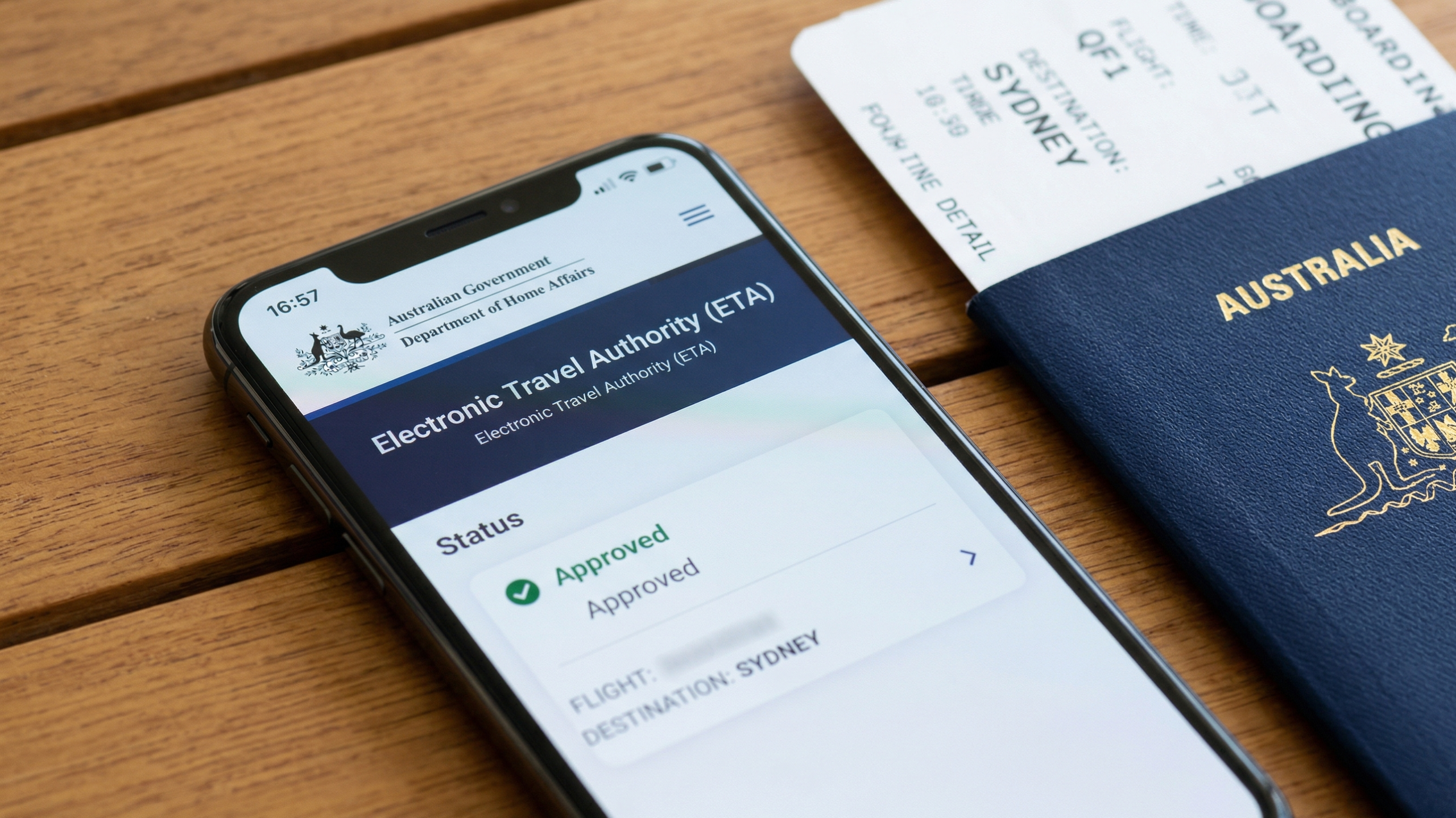
What is the exact difference between the Australian ETA (Subclass 601) and the Visitor Visa (Subclass 600)? The primary differences lie in passport eligibility, application methodology, cost, and maximum stay duration. The ETA (Subclass 601) is a rapid, smartphone-based digital authorization costing a minor AUD 20 service fee, available exclusively to citizens of specific eligible nations (such as the USA, Canada, Japan, and Singapore) for maximum stays of 3 months per visit. In contrast, the Visitor Visa (Subclass 600) is a comprehensive, document-heavy visa available to all nationalities globally. It requires a formal application via ImmiAccount, costs from AUD 195, and offers flexible stay durations of 3, 6, or up to 12 months, depending on the applicant’s proven financial capacity and genuine intent.
Australia remains one of the world’s most highly regulated travel destinations. Regardless of whether you are traveling to close a corporate deal in Sydney, visit family in Brisbane, or explore the Great Barrier Reef, you must hold valid digital travel authorization before boarding your flight.
For many international travelers, the Australian immigration system presents an immediate point of confusion: should you apply for the quick Electronic Travel Authority (ETA), or do you need to undergo the rigorous Visitor Visa assessment? Choosing the wrong pathway can result in denied boarding, lost airfares, or immigration black marks. This comprehensive guide breaks down the technical differences, eligibility criteria, and strategic nuances between Subclass 601 and Subclass 600 in 2026.
1. At a Glance: Feature Comparison
To provide an instant overview of your options, we have outlined the core parameters of both travel documents.
| Feature | Electronic Travel Authority (ETA – 601) | Visitor Visa (Subclass 600 – Tourist Stream) |
| Global Eligibility | Restricted (Specific passports only) | Universal (All nationalities) |
| Application Platform | Australian ETA Smartphone App | ImmiAccount (Web Portal) |
| Government Base Cost | AUD 20 (App Service Charge) | From AUD 195 (Offshore) |
| Processing Timeframe | Usually instantaneous to 24 hours | 14 days to 4 weeks |
| Max Stay Per Visit | Up to 3 months | 3, 6, or 12 months |
| Documentation Level | Minimal (Passport and face scan) | High (Bank statements, itinerary, employment letters) |
| Validity Period | 12 months (Multiple Entry) | Varies (Can be single or multiple entry) |
2. The Electronic Travel Authority (Subclass 601) Explained
The ETA is designed to facilitate seamless, low-friction travel for citizens of countries that Australia considers “low risk” from an immigration and security standpoint.
The Digital App Requirement
In a major shift toward digital border security, the Australian government transitioned the ETA application process almost entirely to mobile devices. You can no longer apply through traditional web portals. You must download the official “Australian ETA” app via the Apple App Store or Google Play Store.
The app utilizes Near Field Communication (NFC) technology. During the application, you must physically tap your smartphone against the biometric chip embedded in your passport and take a live facial scan. This prevents identity fraud and links your biometrics directly to your travel profile.
Eligible Nationalities
The ETA is highly restrictive regarding who can apply. Eligible passports include (but are not limited to):
- United States of America
- Canada
- Japan
- Singapore
- South Korea
- Malaysia(Note: Citizens of the United Kingdom and European Union nations typically apply for the eVisitor Subclass 651, which operates similarly to the ETA).
Privileges and Limitations
An ETA is valid for 12 months from the date of grant. It is a multiple-entry authorization, meaning you can enter Australia as many times as you like within that year. However, you cannot stay longer than 3 months on any single visit.
Furthermore, the ETA strictly prohibits work. You may engage in limited business visitor activities (such as attending conferences or negotiating contracts), but you cannot be remunerated by an Australian entity or provide services to the Australian public.
3. The Visitor Visa (Subclass 600) Explained
If your passport is not eligible for an ETA, or if your travel intentions require a longer stay, the Visitor Visa (Subclass 600) is the mandatory pathway. This visa is broken down into several distinct “streams,” with the Tourist Stream and Business Visitor Stream being the most common.
The Assessment of “Genuine Intent”
Unlike the automated ETA system, Subclass 600 applications are subjected to rigorous assessment by Department of Home Affairs case officers or advanced AI screening models. The core of this assessment is proving that you are a “Genuine Temporary Entrant” (GTE).
The government must be convinced that you intend to visit for the stated purpose and, most importantly, that you have strong incentives to return to your home country before your visa expires.
Heavy Documentary Evidence
Securing a Subclass 600 visa requires substantial proof of your life circumstances. A “Decision Ready” application typically includes:
- Financial Capacity: Certified bank statements from the past three to six months demonstrating sufficient funds to cover flights, accommodation, and daily living expenses without needing to work illegally.
- Ties to Home Country: An official letter from your current employer granting you approved leave and confirming your return date. Property deeds, business ownership documents, or university enrollment letters are also highly effective.
- Travel Itinerary: A logical, detailed breakdown of your planned activities in Australia.
Extended Stays and Single vs. Multiple Entry
While the ETA is capped at 3 months, the Subclass 600 visa allows applicants to request stays of 3, 6, or even 12 months. However, requesting a 12-month tourist visa requires an incredibly high burden of financial proof and usually necessitates passing a comprehensive medical examination by an approved Panel Physician.
Additionally, case officers have the discretion to grant either a Single Entry visa (valid for one trip only) or a Multiple Entry visa.
4. Strategic Considerations: Which One Should You Choose?
For travelers holding an ETA-eligible passport, the choice might seem obvious: pay AUD 20 and get the ETA. However, there are strategic scenarios where an eligible traveler might purposefully choose to endure the harder Subclass 600 process.
Scenario A: The Extended Holiday
If a Canadian citizen (ETA eligible) wishes to travel around Australia in a campervan for six continuous months, the ETA is useless, as it forces an exit after 90 days. They must apply for a Subclass 600 Tourist stream and request a 6-month stay, providing the heavy financial evidence required.
Scenario B: Previous Visa Refusals or Criminal Convictions
The ETA system is designed for straightforward cases. If you have any criminal convictions (regardless of how minor or how long ago), or if you have previously had an Australian visa refused or canceled, the automated ETA app will likely reject your application or refer it for manual processing, which can take months. In these complex cases, applying for a Subclass 600 visa with detailed legal submissions and character statutory declarations is the correct legal pathway.
5. Beware of Visa Conditions (The “8503 – No Further Stay” Trap)
When you are granted either travel document, it comes with legally binding conditions. The most infamous of these is Condition 8503: No Further Stay.
If the Department of Home Affairs attaches this condition to your Subclass 600 visa grant notice, it means you are legally blocked from applying for almost any other substantive visa while you are physically onshore in Australia. You cannot arrive as a tourist, find an employer willing to sponsor you, and seamlessly transition to a work visa. You must leave the country.
While ETA holders generally do not have the 8503 condition attached, Subclass 600 holders from countries deemed “high-risk” for overstaying frequently receive this restriction. Understanding the conditions attached to your grant notice is critical to maintaining lawful status.
Precision at the Border
The distinction between the ETA (Subclass 601) and the Visitor Visa (Subclass 600) represents the difference between a minor administrative task and a major legal application. While the ETA offers unparalleled convenience for citizens of specific partner nations, the Subclass 600 remains the robust, universal gateway for global travelers.
Regardless of which pathway you are obligated to take, the 2026 digital border clearance system is unforgiving of errors. Mismatched passport details, unexplained financial deposits, or a lack of supporting evidence can lead to instant refusals, complicating your ability to travel to Australia for years to come.
Secure Your Australian Journey with Professional E-Visa Processing
Do not leave your travel plans to chance. Whether you need assistance navigating the strict documentary requirements of the Subclass 600 Visitor Visa, or you are facing technical difficulties with the ETA digital app, our team of migration professionals is here to ensure your application is flawless.
We conduct meticulous audits of your financial documents, draft compelling “Genuine Temporary Entrant” submissions, and navigate the ImmiAccount portal on your behalf. We transform confusing immigration bureaucracy into a seamless, “Decision Ready” application.
[Start Your Australian E-Visa Application Today]
Expert Compliance Audits • Secure Digital Processing • Complete Peace of Mind



Leave a Reply