Australia offers a rare and exhilarating opportunity for young explorers: the chance to live in one of the world’s most beautiful countries not just as a tourist, but as a local. The Working Holiday Maker (WHM) program, encompassing Subclass 417 and Subclass 462, is designed to foster international ties and cultural exchange while allowing young adults to fund their journey through temporary employment.
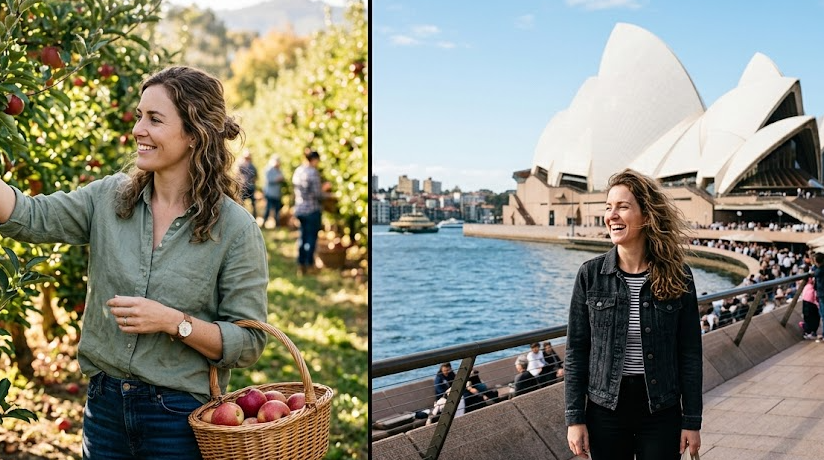
If you have ever dreamed of surfing at sunrise in Byron Bay and serving coffee in a trendy Melbourne laneway by noon, this guide is your roadmap to making that dream a reality.
1. What is the Working Holiday Maker Program?
At its core, the WHM program is a cultural exchange initiative. It is based on the philosophy that travel is the best form of education. However, travel requires resources. The Australian government recognizes this, allowing participants the right to work to supplement their travel funds.
As stated in our mission at AustralianVisaGov, this is a “unique opportunity” for young adults to enjoy an extended holiday. Unlike a standard Visitor Visa, which strictly prohibits any form of work, the Working Holiday Visa (417 & 462) empowers you to be financially independent during your stay.
2. Subclass 417 vs. 462: Which One is Yours?
Many applicants are confused by the two different subclasses. The primary difference is simply your country of citizenship. Both visas offer almost identical rights, but the eligibility requirements and application caps vary.
Subclass 417 (Working Holiday Visa)
This subclass is generally for citizens of countries that have a long-standing reciprocal agreement with Australia. These include many European nations, Japan, South Korea, and Canada. There is usually no limit on the number of visas granted annually for most 417 countries.
Subclass 462 (Work and Holiday Visa)
This subclass is for citizens of countries like the USA, Indonesia, China, Singapore, and several South American nations. Unlike the 417, the 462 visa often has annual “caps” or quotas. Additionally, 462 applicants may need to meet specific educational requirements or provide a letter of support from their home government (depending on the country).
3. Eligibility Criteria: The “Golden Rules”
To qualify for this unique opportunity, you must meet several non-negotiable criteria set by the Undang-Undang Migrasi 1958.
The Age Requirement
Generally, you must be between 18 and 30 years old (inclusive) at the time of application. However, for some countries (such as Canada, France, Ireland, and Italy), the age limit has been extended to 35.
The Passport Rule
You must hold a valid passport from an eligible country. Your passport must remain valid for the duration of your stay. If it expires while you are in Australia, it can cause significant legal complications with your visa status.
Financial Sufficiency
Australia wants to ensure you don’t arrive empty-handed. You are generally required to show proof of at least $5,000 AUD in savings to support yourself initially. Additionally, you must have enough money to purchase a return ticket home at the end of your stay.
4. The Right to Work: What Can You Do?
The “Work” part of the Working Holiday Visa is flexible but governed by specific rules to ensure the visa’s primary purpose remains “holidaying.”
The 6-Month Rule
Under standard conditions, you can work for any employer for up to 6 months. This rule encourages you to move around and explore different parts of Australia rather than settling into one permanent career role. After 6 months, you are expected to move on to a new employer or a new city.
Popular Industries for WHM Holders
- Hospitality: Working in cafes, bars, and restaurants is a staple of the WHM experience.
- Agriculture (Farm Work): Picking fruit, sorting vegetables, or working on cattle stations.
- Construction: Many young adults find high-paying laboring jobs in growing cities.
- Au Pair / Childcare: Living with an Australian family and helping with children.
5. Extending Your Stay: The 2nd and 3rd Year Visas
One year is rarely enough to see all of Australia. The government offers a path to stay for a second or even a third year if you complete a specific amount of “Specified Work.”
- To get a 2nd Year Visa: You must complete 3 months (88 days) of specified work in a regional area of Australia during your first year.
- To get a 3rd Year Visa: You must complete 6 months of specified work during your second year.
What is Specified Work? This includes industries like plant and animal cultivation, fishing, pearling, tree farming, and even bushfire recovery work in certain disaster-affected areas. This is a win-win: you get to stay longer, and regional Australian communities get much-needed support.
6. Education and Personal Growth
While the focus is on work and travel, you are permitted to study in Australia for up to 4 months (17 weeks). This is a great opportunity to take a language course, get a certificate in hospitality (like a Barista or RSA certificate), or learn a new skill that could help you find better-paying work during your travels.
7. Compliance and “Condition 8503”
At AustralianVisaGov, we emphasize Compliance. It is vital to follow all visa conditions:
- Health Insurance: You are responsible for your own health costs. We highly recommend maintaining comprehensive travel/health insurance.
- Taxes: As a Working Holiday Maker, you will pay a specific tax rate (usually 15% on the first $45,000 you earn). You must apply for a Tax File Number (TFN) before you start working.
- Superannuation: When you work in Australia, your employer pays “Super” (retirement savings) into an account for you. When you leave Australia permanently, you can claim this money back!
8. Step-by-Step Application Process
Following our Structured Process, here is how you secure your visa:
- Check Your Passport: Ensure it’s valid for at least 6-12 months.
- Gather Evidence: Get your bank statements (showing that $5,000 AUD), educational transcripts (for 462), and a clear scan of your passport.
- ImmiAccount Setup: Create your profile on the Department of Home Affairs portal.
- Lodge the Application: Fill out the forms accurately. Honesty and consistency are paramount.
- Pay the Fee: The application is not processed until the fee is paid.
- Biometrics/Health Check: If required, visit a local clinic for a quick check-up.
- Approval: Most WHM visas are processed relatively quickly, sometimes within days or weeks.
9. Essential Tips for the Modern Working Holiday Maker
- The “RSA” Certificate: If you want to work in a bar or restaurant that serves alcohol, you must get a Responsible Service of Alcohol (RSA) certificate. Each state has its own rules, so get one as soon as you land.
- Hostel Life: Hostels are not just for sleeping; they are the “job centers” of the WHM world. Talk to other travelers to find out who is hiring.
- Gumtree and Seek: Use these websites to find casual work and second-hand gear (like a van for a road trip!).
- Prepare for Seasons: Remember, Australia is huge. When it’s winter in Melbourne (June-August), it’s the perfect time to head north to the Great Barrier Reef or Darwin where it stays tropical and warm.
10. Conclusion: Your Adventure Starts Today
The Working Holiday Visa (Subclass 417 & 462) is a rite of passage. It is about more than just a job; it is about finding yourself in the vast outback, making friends from across the globe, and experiencing the legendary Australian “no worries” lifestyle.
At AustralianVisaGov, we are dedicated to helping you navigate the regulatory standards and technical processes so you can focus on the fun part: packing your bags. Australia is waiting for you. Are you ready to answer the call?