
In 2026, the Australian migration landscape has undergone its most significant transformation in decades. For travelers, students, and professionals aiming for the Land Down Under, the question is no longer just “Will I get my visa?” but “How fast will it happen?”
Following the landmark overhaul of the processing system on March 25, 2026, the Department of Home Affairs has introduced a more automated, tiered, and priority-driven framework. This guide provides a professional deep-dive into what you can realistically expect for Australian e-visa processing times this year.
1. The Digital Revolution: Australia’s 2026 Visa Overhaul
The year 2026 marks the full implementation of the “Service Standards 2026” initiative. This wasn’t just a software update; it was a complete reimagining of how applications are assessed. By integrating advanced AI-driven digital validation, the Department has managed to separate “standard” applications from “complex” ones almost instantly.
For the majority of low-risk e-visa applicants, this has led to unprecedented speeds. However, for those in complex categories or high-scrutiny streams, the process remains meticulous. The new system moves away from a simple “first-in, first-out” queue, replacing it with a Tiered Priority System that aligns with Australia’s 2026 economic and social needs.
2. Subclass Breakdown: 2026 Benchmarks
Processing times in 2026 vary dramatically depending on your specific visa subclass. Here are the official median benchmarks as of the latest Department updates:
Visitor Visas (Subclass 600, 601, and 651)
The “Quick Wins” of the 2026 system. For most tourism and short-term business visitors, the wait is now measured in hours rather than weeks.
- Median Processing: Less than 24 hours.
- 90% of Applications: Finalized within 1–3 weeks.
- Expert Insight: If your application is “Decision Ready” (all documents uploaded correctly at the start), the automated validation system can often grant these visas almost instantaneously.
Student Visas (Subclass 500)
Student visas have seen a significant speed boost to ensure students can join their February or July intakes without the traditional “mad rush.”
- Higher Education Stream: 21–29 days.
- Postgraduate Research: 26–33 days.
- 90% of Applications: Finalized within 4 months.
- Note: 2026 saw stricter Integrity Testing for vocational education sectors, which may result in longer wait times for non-university applicants.
Working Holiday Maker (Subclass 417 and 462)
To support the regional tourism and agriculture sectors, Australia has kept these pipelines wide open.
- Typical Processing: 1–2 days.
- 90% of Applications: Finalized within 10 days.
Skilled & Temporary Work Visas (Subclass 482 and 190)
This is where the Ministerial Direction 115 is most visible.
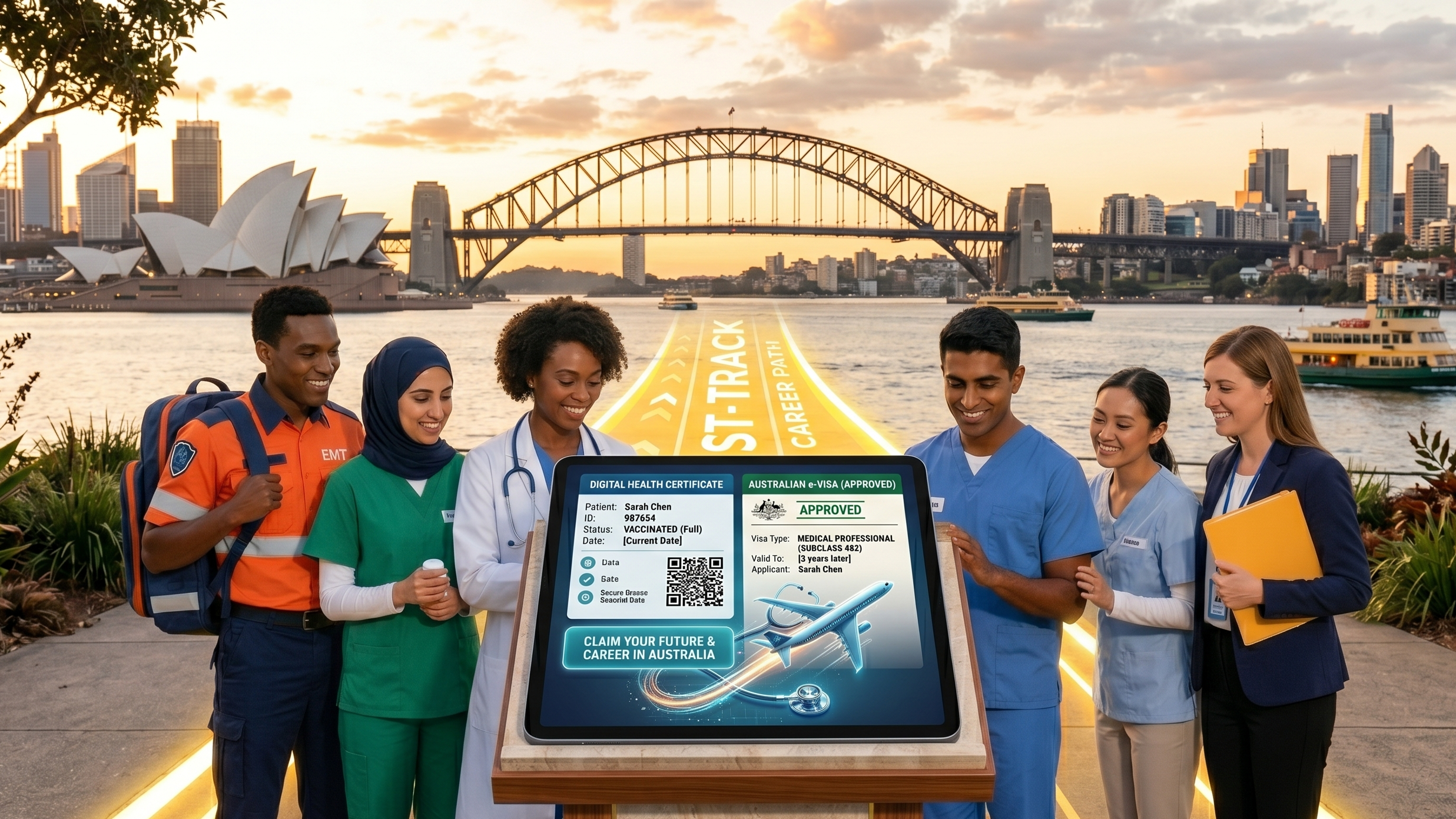
- Priority Sectors (Healthcare, Teaching, Construction): Under 6 months.
- General Skilled Migration: 9–11 months.
- Temporary Work (482): Approximately 87–123 days for decision-ready files.
3. The Two-Speed System: Who Gets Priority?
Under the new 2026 directives, Australia operates on a “Two-Speed” system. If your profile aligns with the nation’s urgent shortages, you are pulled to the front of the digital line.
High-Priority Sectors in 2026 include:
- Healthcare Professionals: Doctors, nurses, and aged care specialists.
- Education: Early childhood and secondary teachers.
- Construction & Infrastructure: Essential for the 2026 housing initiatives.
- Regional Applicants: Those willing to work in designated regional areas (like parts of Queensland outside Brisbane).
If you fall outside these sectors, your application will still be processed according to the service standards, but you won’t experience the “accelerated” track.
4. The “Pause Effect”: Why Some Visas Take Months
The most common reason for a 2026 application exceeding the median time is what migration experts call the “Pause Effect.”
When the Department finds a discrepancy or a missing document, they issue a “Request for Information” (RFI). The moment an RFI is issued, your file is removed from the active digital queue and placed in a manual review pile. Even if you respond within minutes, it can take weeks for a case officer to manually re-open and validate your new data.
Key Triggers for the Pause Effect:
- Incomplete Financial Evidence: Not showing the required 3–6 months of consistent bank history.
- Character Clearances: Delays in obtaining police certificates from third-party countries.
- Health Checks: Booking medical examinations with Bupa-approved clinics can have a 2–3 week wait time in busy cities.
5. Seasonal Fluctuations to Watch in 2026
Despite automation, human intervention is still required for final approvals in many subclasses. You should expect “bottlenecks” during these periods in 2026:
- The “March Surge”: Following the March 25th system rollout, there was a massive influx of applications testing the new platform.
- The July Peak: As students prepare for second-semester intakes, Subclass 500 processing may fluctuate.
- Holiday Backlogs: Applications lodged in December 2025 and January 2026 often merge with new February 2026 lodgments, creating a temporary queue expansion.
6. Maximizing Your Speed: The “Decision Ready” Strategy
To benefit from the 24-hour processing targets for visitor visas or the 29-day student targets, your application must be “Decision Ready.” This means the case officer (or the AI validator) has everything they need to say “Yes” without asking a single question.
- High-Resolution Scans: Do not use phone photos for documents; use professional color scans.
- Clear Itineraries: Be specific. Instead of saying “Tourism,” list the dates for your visit to Queen’s Wharf or the Great Barrier Reef.
- Consistent Data: Ensure your passport details, national ID, and ImmiAccount profile are 100% identical.
Planning with Precision
In 2026, the Australian visa process is faster than ever, but it is also more unforgiving. The automated systems reward perfection and penalize errors. Understanding these timelines is the first step; executing a flawless application is the second.
Secure Your Future Today
Ready to bypass the backlogs and secure your Australian Visa?
At Visa Australia Gov, we don’t just “submit” applications—we engineer them for success. Based in the heart of Brisbane City at Queen’s Wharf Residences, our team stays ahead of every 2026 policy shift and Ministerial Direction.
Whether you need a Visitor Visa in 24 hours or a complex Skilled Migration strategy, we ensure your file is “Decision Ready” from day one.
Direct Consultation • Professional Document Audits • Official 2026 Compliance
Contact us today at our Brisbane Office or apply online via our secure platform.

Tinggalkan Balasan