Australia is home to some of the world’s most prestigious universities and vocational institutions. From the bustling urban campuses of Sydney and Melbourne to the innovative research hubs in Brisbane and Perth, the Australian education system is designed to foster critical thinking, creativity, and global networking.
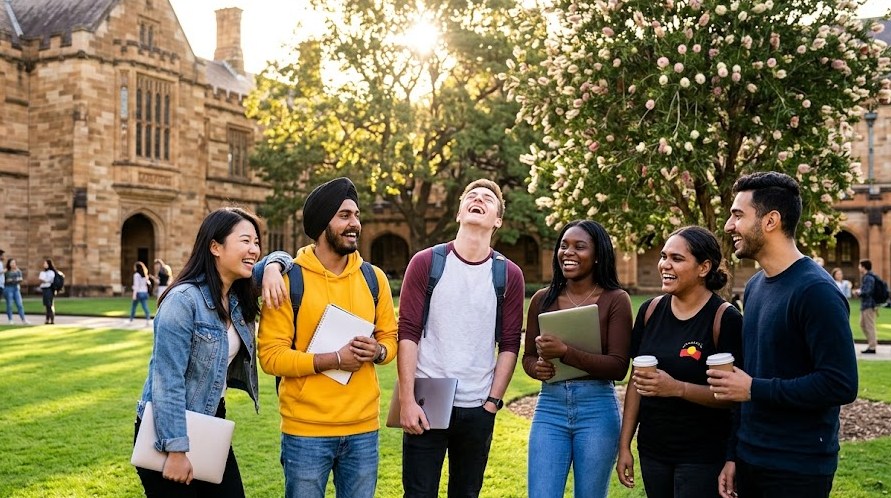
The Visa Pelajar (Subkelas 500) is the “dedicated student permit” that allows you to live in Australia for the duration of your study program. As mentioned in our mission, this visa is your ticket to enrolling in world-class educational institutions while experiencing the unique Australian lifestyle. In this comprehensive guide, we will explore every detail you need to know to secure your future in the land of the Southern Cross.
1. Understanding the Subclass 500 Visa
The Subclass 500 is a single, streamlined visa category for all international students. Whether you are coming to Australia for a primary school education, a vocational certificate (VET), a Bachelor’s degree, or a PhD, this is the permit you will use.
The primary benefit of this visa is its alignment with your study program. Your visa duration is typically granted to match the length of your course, plus a short period at the end (usually 1 to 2 months) to allow for graduation ceremonies or travel before you return home or transition to a new visa.
2. Choosing Your Educational Pathway
Before applying for the visa, you must be enrolled in a course that is registered on the Commonwealth Register of Institutions and Courses for Overseas Students (CRICOS). Australia offers various “sectors” of study:
- Higher Education: Bachelor, Master, and Doctoral degrees.
- VET (Vocational Education and Training): Certificates and Diplomas focusing on practical skills like hospitality, automotive, or nursing.
- ELICOS (English Language Intensive Courses for Overseas Students): Standalone English courses.
- Postgraduate Research: Master by research or PhD programs.
- Primary and Secondary School: For younger international students.
3. The Eligibility Checklist: Key Requirements
To secure a Subclass 500 visa, you must meet rigorous standards defined by the Peraturan Migrasi 1994.
A. Confirmation of Enrolment (CoE)
The CoE is the most critical document. It is a digital code issued by your school or university once you have accepted your offer and paid your initial tuition fees. You cannot lodge a valid student visa application without a CoE.
B. The Genuine Student (GS) Requirement
As of 2024 and continuing into 2026, the Australian government replaced the old GTE (Genuine Temporary Entrant) with the Genuine Student (GS) requirement. This is a set of targeted questions within the application that assess:
- Your circumstances in your home country.
- Why you chose this specific course and institution.
- How this course will benefit your future career.
- Your understanding of the visa conditions.
C. English Language Proficiency
Since Australia is an English-speaking nation, you must prove you can follow the curriculum. Most students will need to take a test like IELTS or PTE Academic. The required score depends on your level of study:
- Bachelor/Master: Usually 6.0 to 6.5 IELTS equivalent.
- VET Courses: Usually 5.5 IELTS equivalent.
D. Financial Capacity
You must prove you have enough money to pay for your tuition, travel, and living costs. For 2026, the estimated living cost requirement is approximately $29,710 AUD per year for a single student. You may be asked to show bank statements, loan approvals, or government sponsorship.
4. Health and Character Standards
Australia prioritizes the health of its community. As a student, you must meet these two criteria:
- Overseas Student Health Cover (OSHC): This is a mandatory private health insurance that you must maintain for the entire duration of your visa. It covers doctor visits, some hospital treatments, and emergency ambulance services.
- Character Check: You must be of good character. You may be required to provide police clearance certificates if you have lived in any country for 12 months or more in the last 10 years.
5. The “Structured Process” for Application
At AustralianVisaGov, we recommend following this clear path to avoid delays:
- Apply to a School: Get your Letter of Offer.
- Accept and Pay: Receive your Confirmation of Enrolment (CoE).
- Gather Documents: Prepare your GS statement, financial evidence, English results, and OSHC.
- ImmiAccount Setup: Lodge your application online.
- Pay the Visa Fee: The application is not active until the charge is paid.
- Biometrics & Health Exam: Visit an approved clinic for your medical check-up.
- Visa Grant: Receive your digital visa and start your packing!
6. Visa Conditions: The Rules of Study
Maintaining your visa status is about Compliance. You must obey several “Conditions”:
- Condition 8105 (Work Rights): In 2026, most students are permitted to work up to 48 hours per fortnight while their course is in session, and unlimited hours during scheduled course breaks.
- Condition 8202 (Academic Progress): You must remain enrolled in a CRICOS-registered course, attend classes regularly, and maintain satisfactory academic progress.
- Condition 8533 (Address Notification): You must notify your education provider of your Australian residential address within 7 days of arriving, and notify them of any changes.
7. Living as a Student in Australia
The Australian student experience goes beyond the classroom.
- Accommodation: You can choose between “On-Campus” dorms, private rentals, or “Homestay” (living with an Australian family).
- Cost of Living: While Australia is a high-wage country, it can be expensive. Students often save money by using student discounts on public transport and at grocery stores.
- Culture: Australia is incredibly multicultural. You will find “pockets” of every culture in the world, especially in the food and festival scenes of major cities.
8. Post-Study Pathways: What Happens After Graduation?
Many students fall in love with Australia and want to stay. After completing your studies, you may be eligible for the Temporary Graduate Visa (Subclass 485). This visa allows you to live and work in Australia for 2 to 4 years (depending on your degree) to gain local work experience. This experience can eventually lead to Kependudukan Permanen through skilled work pathways.
9. Expert Strategy: Why Student Visas Get Refused
Integrity and consistency are our core values. Avoid these common mistakes:
- Generic GS Statements: If your statement looks like it was “copy-pasted” from the internet, it will be refused. Be personal and specific.
- Insufficient Funds: Showing a large sum of money deposited right before the application is a “red flag.” The government wants to see a history of savings.
- Lack of Research: If you don’t know the units of your course or the name of your campus, you may fail a visa interview.
10. Conclusion: Ignite Your Future
The Visa Pelajar (Subkelas 500) is more than just a permit; it is an investment in your global identity. By studying in Australia, you are gaining a world-class education that is recognized by employers everywhere. You are building a network that spans continents and gaining life skills that will serve you forever.
At AustralianVisaGov, we are dedicated to making this journey as smooth as possible. We help you navigate the regulatory standards so you can focus on what matters: your education. Are you ready to become an international student in Australia?