

Australia’s vibrant economy, exceptional healthcare system, and unparalleled quality of life make it a premier destination for skilled professionals, international students, and families worldwide. However, the pathway to living, working, or studying Down Under is guarded by one of the most rigorous and complex immigration systems in the world.
For many applicants, the Australian visa process is characterized by a pervasive sense of anxiety and notoriously long processing times. While the Department of Home Affairs (DoHA) provides global processing timeframes, the reality is that individual applications can deviate significantly from these averages.
A common question arises: Can I speed up the process? While no one can bribe a government official or magically skip the global queue, there is a proven, strategic way to ensure your application is processed at the absolute maximum speed allowed by the system: partnering with a Registered Migration Agent (RMA). This comprehensive guide explores the critical role a migration agent plays in securing your Australian visa faster, navigating the legislative labyrinth, and protecting your future.
Understanding the Complex Australian Immigration Landscape
To understand why a migration agent is so valuable, you must first understand the battlefield. The Australian immigration framework is not a simple checklist of documents. It is governed by the Undang-Undang Migrasi 1958, the Peraturan Migrasi 1994, and thousands of pages of dynamic policy guidelines known as the Procedures Advice Manual (PAM3).
Every year, the Australian government tweaks visa conditions, alters the occupational skills lists, adjusts points thresholds, and introduces new legislative hurdles (such as the recent shift from the Genuine Temporary Entrant to the Genuine Student requirement).
When a DIY applicant lodges a visa, they are often relying on outdated blog posts or well-meaning advice from friends who applied years ago. Submitting an application based on outdated information does not just cause delays; it is the leading cause of instant visa refusals. A Registered Migration Agent acts as your legal navigator, ensuring your application is perfectly aligned with the legislation active on the exact day of your submission.
Myth vs. Reality: Can an Agent Actually Speed Up the Queue?
It is crucial to dispel a persistent myth: a migration agent does not have a “VIP hotline” to the Department of Home Affairs, nor can they ask a case officer to prioritize your file simply because they represent you. Under Australian law, all applications are processed in the order they are received, subject to ministerial directions on priority processing (such as prioritizing healthcare workers).
However, an agent accelerates your timeline through strategic optimization. They do not speed up the queue; they ensure that when your application finally reaches the front of the queue, it is approved immediately rather than being stalled, questioned, or pushed back.
5 Ways a Migration Agent Accelerates Your Visa Approval
Here is the precise mechanics of how a Registered Migration Agent cuts months off your visa processing time:
1. Selecting the Optimal Visa Pathway from Day One
The fastest way to secure a visa is to apply for the correct one the first time. Australia offers over 100 different visa subclasses. A highly skilled IT professional might be eligible for a Skilled Independent Visa (Subclass 189), a State Nominated Visa (Subclass 190), or an Employer-Sponsored Visa (Subclass 482).
Each of these visas has vastly different processing times, ranging from a few weeks to over a year. An agent conducts a forensic assessment of your qualifications, age, English proficiency, and career goals to map out the fastest, most secure pathway. Choosing the wrong subclass—only to realize six months later that you do not meet a specific nuance of the criteria—is a catastrophic waste of time.
2. Crafting a “Decision-Ready” Application
This is the most critical factor in rapid visa processing. When a Department of Home Affairs case officer opens your digital file, their goal is to make a decision as quickly as possible.
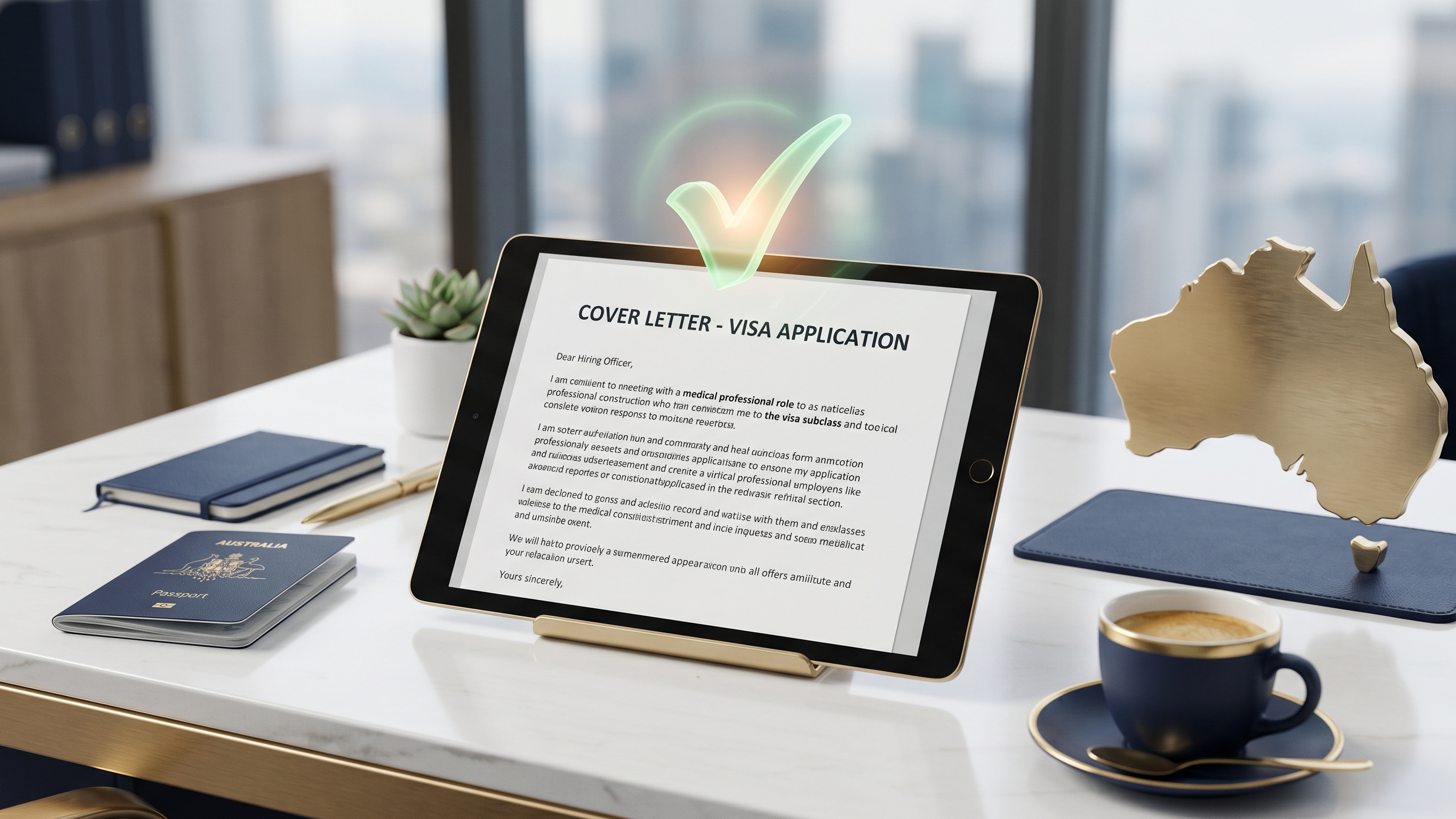
A DIY application is often fragmented. Documents might be uploaded in the wrong format, incorrectly named, or missing crucial context. A migration agent compiles a “Decision-Ready Application.” This means front-loading the application with every conceivable piece of evidence required by law—including proactive medical examinations, international police clearances, and formal skills assessments—before the case officer even asks for them. When an officer opens a decision-ready file, they can grant the visa in a single sitting.
3. Eliminating Requests for Further Information (RFIs)
If an application is incomplete or ambiguous, the case officer will pause processing and issue an s56 Request for More Information (RFI).
An RFI is the absolute enemy of fast processing. When an RFI is issued, your application is placed on hold. You are typically given 28 days to provide the missing document. Once you provide it, your file goes back into a holding pool, waiting for the officer to have time to review it again. A single RFI can delay your visa grant by two to three months. Migration agents anticipate exactly what the officer needs to see and eliminate ambiguities, effectively neutralizing the risk of an RFI.
4. Navigating Complex Legal Hurdles and Waivers
Not every applicant has a perfect history. You might have a minor criminal conviction from a decade ago, a pre-existing medical condition, or a previous Australian visa refusal.
In these scenarios, a standard application will be flagged, delayed, and likely refused. A migration agent understands how to navigate these complexities using legal frameworks. They can preemptively draft comprehensive legal submissions—such as arguing for a Health Waiver (PIC 4007) or explaining character concerns—citing relevant case law and policy. By addressing the “red flags” proactively and professionally, the agent prevents the case officer from launching a prolonged, multi-month investigation into your background.
5. Managing Third-Party Assessing Authorities
For skilled migration, your visa application is only the final step. The most time-consuming hurdles are often the preliminary stages: securing a positive Skills Assessment from authorities like Engineers Australia, the Australian Computer Society (ACS), or VETASSESS.
Each assessing body has its own unique, highly pedantic requirements for reference letters, payslips, and syllabus breakdowns. An agent manages these third-party applications, ensuring they are done correctly the first time. Failing a skills assessment because a reference letter lacked a specific sentence can set your migration timeline back by six months.
The Hidden Costs of the “DIY” Approach
In an age of digital tutorials and forums, it is tempting to view visa applications as a simple administrative task to save money. However, the cost of a delayed or refused visa far outweighs the professional fees of a migration agent.
- Financial Loss: Visa Application Charges (VACs) for Australian visas are among the highest in the world—often ranging from $1,500 to over $9,000 AUD. If you make a mistake and your visa is refused, the Australian government does not refund this fee. You lose the money entirely.
- The Section 48 Bar: If your visa is refused while you are onshore in Australia, you may be subject to a Section 48 bar. This legally prevents you from applying for almost any other visa while remaining in the country, effectively forcing you to pack up your life and leave Australia.
- Opportunity Cost: Every month your visa is delayed is a month of lost Australian wages, delayed university enrollment, or prolonged separation from your family.
How to Choose the Right Migration Agent
If you decide to leverage professional help to speed up your visa process, you must ensure you are hiring a legitimate expert.
By law, anyone providing immigration assistance in Australia must be registered with the Office of the Migration Agents Registration Authority (OMARA).
- Verify their MARN: Always ask for their Migration Agent Registration Number (MARN) and verify it on the official OMARA website.
- Check their Specialization: Migration law is vast. If you are applying for a complex Business Innovation visa, do not hire an agent whose primary experience is in student visas. Look for an agent with a proven track record in your specific visa subclass.
- Beware of Guarantees: It is illegal under the OMARA Code of Conduct for an agent to guarantee a visa approval. If an agent promises a “100% success rate” or claims they can “bribe the system,” walk away immediately.
Time is Your Most Valuable Asset
Securing an Australian visa is a life-changing event. It dictates where you will live, how you will earn a living, and the future of your family. In 2026, the Australian immigration system is operating under intense scrutiny, with a zero-tolerance policy for fraudulent or sloppy applications.
A Registered Migration Agent does not just fill out forms; they are your legal advocate, your project manager, and your strategist. By choosing the optimal pathway, submitting decision-ready files, and expertly dodging bureaucratic landmines, an agent transforms a stressful, drawn-out ordeal into a streamlined, efficient success. Investing in professional representation is the most reliable strategy to accelerate your journey to Australia.
🛂 Fast-Track Your Australian Dream Today!
Don’t leave your future to chance or get stuck at the back of the processing queue due to avoidable errors. Ensure your application is decision-ready from day one.
[Click Here to Start Your Official Australian e-Visa Registration and Connect with Migration Experts Today] to secure your visa faster and start your new life Down Under!



Tinggalkan Balasan